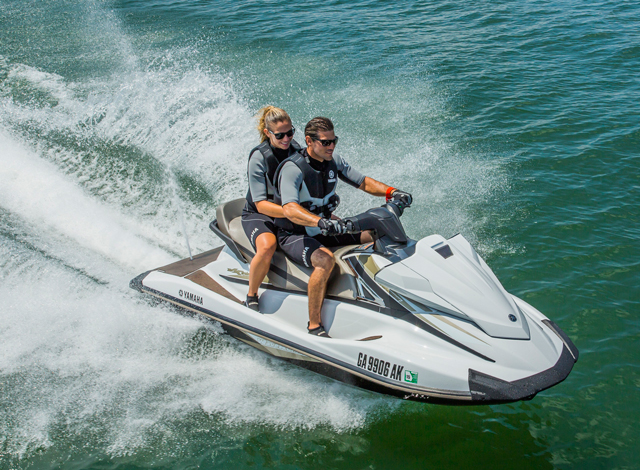
Yamaha FX WaveRunner Series 2012
The new Yamaha FX WaveRunner PWCs are built for comfort. Four models offer more seat room and many nifty features.
September 26, 2011
It’s not a stretch to say that the new Yamaha FX WaveRunner series was designed by the customer. Driven by “voice of the customer” surveys, Yamaha says its focus in developing four all-new FX models was comfort, comfort, and comfort.
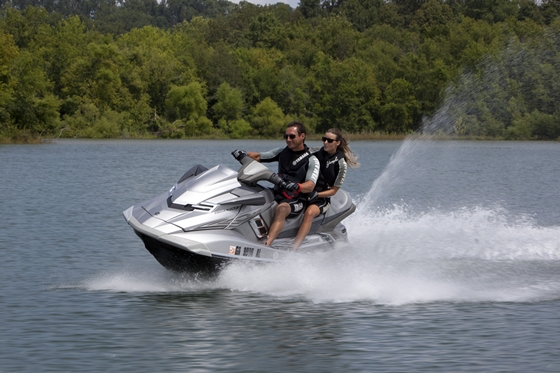
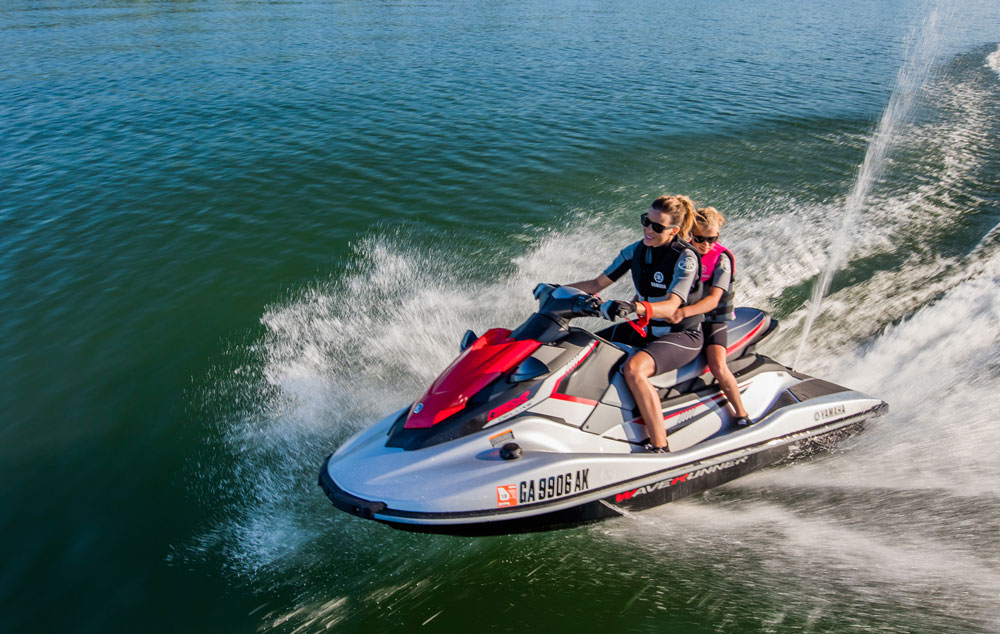
The 2012 Yamaha FX WaveRunner FX offers confident handling with one passenger on board, and provides good seating for yet another.
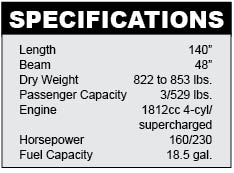
To that end, Yamaha went bigger, bigger, and bigger. The new FX is 7.5 inches longer than the previous FX models. About three inches of the added length was applied to seat area, while the rest was devoted to the boarding platform. Yamaha will offer the FX in standard and touring-oriented Cruiser trim, and with two engine options, a 160-hp 1.8-liter High Output (HO) or a supercharged/intercooled 1.8-liter Super High Output (SHO) version that makes about 230 hp. Note that Yamaha does not publish official power ratings, but I am able to divine this information from emissions-compliance records.
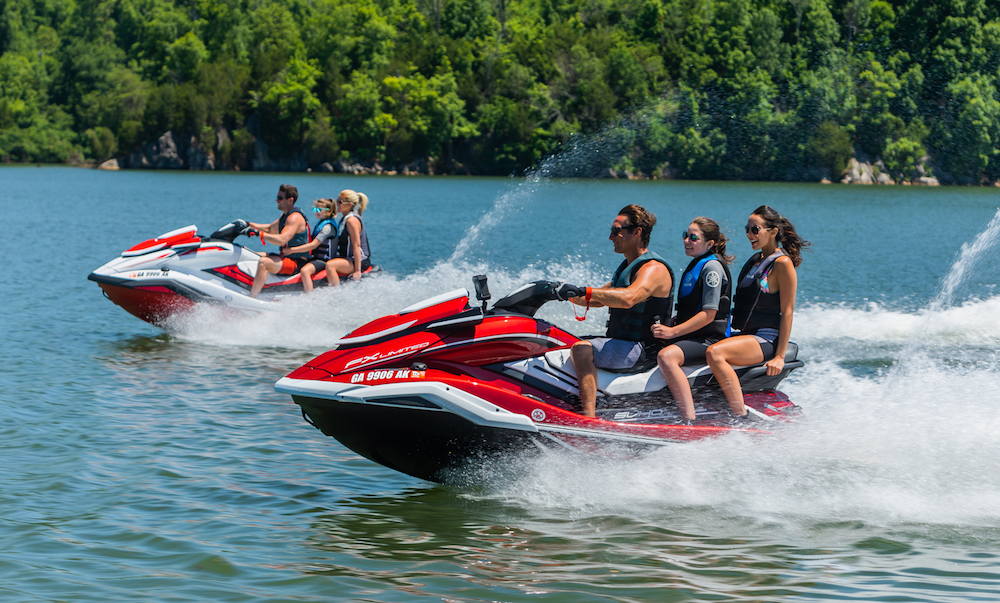
The highlight of the Cruiser package is a new seat that offers three distinct, deeply bolstered positions for the pilot and two passengers. The middle seat position is about six inches higher than the pilot seat, while the aft spot is four inches higher still, the point being to give each person a view forward. Its added length means this seat now offers comfortable space for three adults, not just two adults and a child. And yes, I tried it, sandwiched between two hefty men. If there’s a downside to this seat, it’s that the deep bucket shape locks the pilot into one position, and sometimes it’s nice to be able to move around on the seat during a long ride. The Cruiser package also includes a pair of pull-up cleats, and built-in GPS that enables more instrument features (like a compass and position display) but is not set up for actual navigation. The Cruiser models also have a fuel-flow meter function on the display.
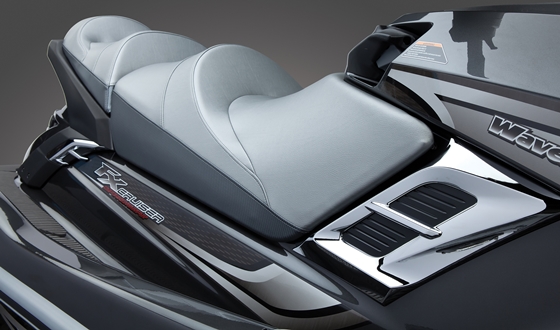
The new seat on FX Cruiser models has bolstered positions for three adults.
The seats on the standard models (FX HO and FX SHO) are also longer, with three stepped positions, but they are not as dramatically bolstered as those on the Cruiser seat. All new FX models have deeper footwells that create a little more legroom. The helm and dash areas are redesigned, with control buttons for the LCD screen functions moved from the handlebars to the cowl. New ergonomic handgrips (similar to those seen on new mountain bicycles) make a dramatic difference in hand comfort, especially when standing. Trim adjustment has been moved from a twist-grip on the left side to a collar located inboard of the left-hand grip. It’s easy to use, but there’s no position indicator. Four-step adjustable steering height, and drive-by-wire throttle that enables two speed-control functions is standard equipment on all FX models.
A mechanical reverse lever has a new positive lock position for neutral thrust. This can be selected before starting the engine, and in my test the FX did not move when neutral was selected. This is a tepid response to the Sea-Doo digital reverse/neutral control hand lever, but it’s better than what Yamaha has offered in the past.
The new FX has two grab handles that even most kids should be able to reach when using the reboarding step. Another new feature is a storage compartment built into the seat base above the boarding platform for wet gear or lines. There’s even a notch in the top of the hatch so a ski or dock line could stay secured to the U-bolt tow point while its length is stowed in the compartment.
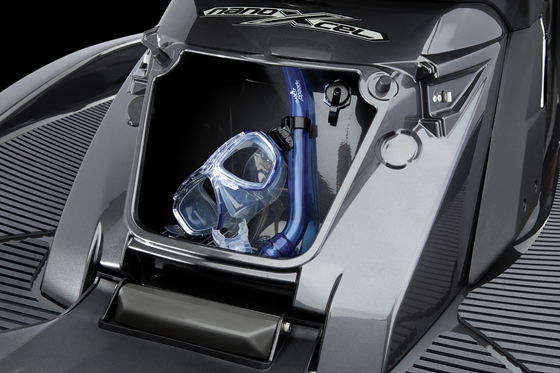
The nifty compartment below the seat is designed to hold wet gear or a ski line, and also covers the engine flush fitting.
The boats we rode at a one-day test session were not production models, but were close enough to make a solid judgment on performance, and I’ve got say I was pleasantly surprised at how well the FX works. I expected that seven more inches of length, and about 13 pounds more weight would compromise performance. But the new FX models are actually more agile and responsive than the craft they will replace. At speed, the old FX hull rode sort of high on its pad, then tipped onto the inside chine when a turn was initiated. These new boats don’t do that at all. Turn the bars and the boat responds instantly, with just enough inside lean to press pilot and passengers securely into the seat. Response to steering input is non-linear, so that as you turn harder, the boat responds with more aggressive handling. If you want to get sporty, the FX can be a lot of fun. In some stiff lake chop, I was able to stay seated without getting smacked around or sprayed in the face. The hull offers a nice ride without feeling heavy. For me, the ergonomics when standing were perfect with the bars set to their top position.
I was surprised at how little performance difference there seemed to be between the 160-hp HO models and the 230-hp SHO. The SHO is quicker out of the hole, and will run about 67 mph with a single rider and light fuel load. The HO tops out at about 64 mph. Is that worth $1,500? I think most families will be more than satisfied with the performance of the HO models.
What could Yamaha do better? I am honestly having a hard time finding anything to criticize on this boat. It would be nice if the cruise control had a memory (like the Sea-Doo) so it would not have to be re-set every time the boat is stopped -- to pick up a downed boarder, for example. But that’s about it. The new FX platform is a highly evolved, carefully refined machine – just what the customer ordered.
Pricing is as follows: FX HO $12,499; FX Cruiser HO $12,999; FX SHO $13,999; FX Cruiser SHO $14,599.
For more information visit Yamaha WaveRunners.
Watch a short video about the WaveRunner FX trunk
Watch a short video about the WaveRunner FX ladder